Monday, November 8, 2010

Generosity Changes the World

Click Here to Listen to the Sunday, November 7, 2010 Sermon by Pastor Chip Moody.


Scripture Reference:  1Timothy 6:6-10, 17-19


In the Heart of God Lives Generosity

When Jesus said to “store up for yourselves treasures in heaven . . . for where you treasure is there will your heart be also,” he used an interesting reflexive phrase. He proclaims that by giving to others you store up “for yourselves.” Who doesn’t want to store up treasures for one’s self?  But Jesus says we can do this only by choosing not to make a priority of storing up for ourselves treasures on earth. (Matthew 6.19-21)

The passage in Timothy we learned from last Sunday is about learning to serve yourself by serving others. It is counterintuitive to the carnal mind that we can fulfill our needs for self-treasuring by sharing our treasure with others. Yet in verse 17 Paul commands the rich in this present world (that’s us Americans, incidentally) not to put their hope in wealth. If we have ever put our hope in wealth I think it has been cured for a while. We have learned in the last three years that the words “financial security” can be an oxymoron in a recession.

Rather than putting our hope in wealth, the Apostle says, “Command them [we the rich] to do good, to be rich in good deeds, and to be generous and willing to share. In this way they will lay up treasure for themselves as a firm foundation for the coming age, so that they may take hold of the life that is truly life.”

Those are some powerful phrases that Paul loads into verses 18-19! Generous. Willing to share. Laying up treasure for the coming age. To take hold of Real Life.

Here are the lessons I learn from this passage, as well as Jesus’ words about generosity, care for the poor, and treasure in heaven:

Generosity toward God changes my thinking.
When we get it in our heads that God owns everything and entrusts it to us for management, then we will be more cognizant of God’s priorities when we get our paycheck. We will learn from the aftermath of foolish purchases. We will grieve over our inability to serve God with our generosity because of runaway debt. We will also begin to see our own greed and selfishness clearly for what it is.

Generosity toward God changes my actions.
We now behave like a trusted manager. Our hearts are now tied together with our money. Our giving becomes systematic—not occasional or inconsistent. We start “seeing” the poor and afflicted as those to whom god has called us to share of what we have.

Generosity toward God changes my feelings.
I am now willing to share.  (v. 18)  I now want to take hold of life that is really life. Most folks chase getting, spending and hoarding for me, me, me. God changes my feelings so I no longer think that making more money and spending it on me is the purpose of life. 

I now know that generosity is how we take hold of real living. I now feel cheerful when I give. A cheerful, satisfied giver. It is actually FUN to have set aside money (or my time, goods, presence, prayers, skills) with which to bless someone who is in need of it. And it isn’t always important for me to know if the recipient is “worthy” or “responsible” since it isn’t my money anyway. 

*******************

These three lessons above amount to a single principle for life that can guide me: WHEN GENEROSITY CHANGES ME, MY GENEROSITY WILL CHANGE THE WORLD.

Here are some parting words for the resistant:

I have heard from people time and again when they are challenged to become generous people toward God, “Once I have more, then I will give more to God.” To which I answer, “No you won’t.”  You won’t because giving is a faith issue.  If you are faithful in little then you will be faithful in much.  In the parable of the stewards you will notice that the amount the stewards were responsible for wasn’t of concern to the master.  What mattered was their faithfulness.

Let’s not sugarcoat this friends.  The reason we are not generous people is because we think that our money and possessions belong to us.  Either we believe God owns everything or we don’t, and most folks don’t believe it. I want to be think differently, act differently, feel differently.  I want to be generous.  I feel good being generous.  I act a lot better when I am generous.  I think straighter when I’m generous. 

There is no more profound model of generosity that our Lord Jesus Christ, whose generosity in giving his life for all us ingrates is monumental. Let his generosity be our inspiration. Let us also “run the race with endurance that is set before us. fixing our eyes on Jesus . . . who for the joy set before him endured the cross.”  (Hebrews 12:1-2)

Monday, November 1, 2010

His Name Was Al

The Flame that I Lit in Memory of Pastor Al
and All the Others Who Have Passed the
Torch of the Gospel on for Generations.
What was that person's name?  You know the one.  They walked on your Journey with you awhile.  They encouraged you, brought you hope, loved you.  Perhaps they are the one who got you to think about God for the first time. 

For me, that person was Pastor Al.  He cared enough to go head-to-head with me and defeat all my objections to God.  He took the time to share Christ with me.  He changed my world and lit a fire in me that continues to this day.  I never got a chance to tell him in this life how thankful I am, but I know I will one day see him again in heaven and can thank him there.*

Sunday was All Hallows Eve and today is All Saints Day.  Though many have connected these dates with pagan holidays, they are actually Christian holidays.  Yes, the Celts celebrated Samhain around this time, but many cultures have celebrated death at this time of year.  Though we Americans live in a time of abundance, much of the world through most of our history have not.  This time of year was when harvest was finishing and it was time to consider the long winter ahead, wondering if your family would survive till spring.  Without electricity, the longer nights meant greater darkness and fear of those things that controlled the night.  It's only natural to contemplate our mortality in these times.

All Saints is a time of hope.  We remember those who have gone before us and take encouragement and hope because of what they brought us.  Sorrow and Joy are just two sides of the same coin when we consider those we've lost.

A single lamp can light a room, but thousands can light the world.  If we take any hope or encouragement from those that shared their Journey of faith with us before, then it is our absolute responsibility to honor them by sharing our faith and hope with others.

Our All Saints Celebration this last Sunday was about that very idea.  As one match lights another and another, so too, someone shared with you and you must share your story with others. 

Please listen through our service below.  Contemplate those you've lost and then turn that into action. 

* More about Pastor Al can be heard in the sermon link below and you can read the full story on my personal blog by clicking this link.

All Saints Celebration Service - Mountain View Christian Church 2010:

Scripture Reference: Matthew 28:19-20

Click on each link to listen to the Sunday, October 31, 2010 Service. 

Welcome & Explanation of All Saints Celebration - Pastor Rodger S. Loar

Readings & Solo - Sarah Drum, Erin Paige, Rebecca Loar, Sharon Vincent (Readings) & Shellie Allen (Solo)

"His Name Was Al" Sermon by Pastor Rodger S. Loar

Songs of Remembrance, Prayer & Offering - Daniel Vincent and Earl Lewis

Communion & Sacred Space - Pastor Rodger S. Loar & Sharon Vincent (Piano)

Songs of Praise & Benediction - MVCC Praise Team

Monday, October 25, 2010

Interview on the Global Forum on Human Trafficking


Slavery didn't end with Abraham Lincoln.  It exists today and is a larger problem than ever before.  Largely ignored by the media, this plague affects women and children (and men too) world wide.  This isn't just a problem for other countries, it happens here in the United States.  Even worse, part of our economy is built on slavery and you probably don't even know it.  The chocolate you eat, the coffee you drink and the clothes on your back just may have been touched by slaves. 

The Not For Sale Campaign works against slavery.  They recently held a Global Forum on Human Trafficking in Yorba Linda, California to address these issues.

Two women from MVCC attended this Forum and have brought back a report for us.  Amber Tappe, our Student Ministries Director has long had a heart for the downtrodden around the world.  Liana Wolfe is the Director of Mountain View Christian Preschool and has travelled to Cambodia as an advocate for Rapha House, an organization that helps young girls out of sex slavery in South East Asia. 

Click Here to Listen to Pastor Rodger S. Loar Interview Amber and Liana

What can you do about this?
  1. Visit the Not For Sale website and educate yourself:  http://www.notforsalecampaign.org/
  2. Visit the Fair Trade USA website to educate your self:  http://www.transfairusa.org/
  3. Visit the Rapha House website: http://www.raphahouse.org/.
  4. Look for the Fair Trade symbol on you coffee, chocolate, and clothing (pictured below)
  5. Watch your local and national news for stories on slavery.  They are actually quite common.
  6. Contact MVCC at (602) 955-9414 or by email at email@mvccaz.com for more ways you can help.


Who is My Neighbor

Click Here to Listen to the Sunday, October 24, 2010 Sermon by Pastor Don Allen

Scripture Reference:  Luke 10:25-37

Imagine that you are watching an old Western movie about a town in the Wild West. Like Tombstone, maybe. Suddenly the townspeople see a lone Apache walking down the middle of main street. There is a man flopped across his saddle, with two arrows in his back. Hitching his horse, he carries the wounded man into the saloon and lays him on a table. Handing the barkeep a bag of coins, he says, “Please find this man a room and patch him up. I’ll come back in a week and check on him. Charge me for all his expenses. Let’s get this man healed up.”

Many who read the Story of the Good Samaritan (Luke 10:25-37) will think that the moral of the story is to answer the question, “Who is my neighbor?” But as we discovered in yesterday’s message, this story is about how people show mercy to each other, in spite of their differences.

There are many forces around us who want to shape our beliefs about people. Many are afraid of people who look and act differently than us. Jesus reminds us to look upon people as God sees them. He also reminds us that mercy is not a feeling; it is an action.

You have an opportunity today to take action, to show mercy to others. There are many opportunities. Here are a few of them:
  1. Help our youth prepare for summer camp by helping prepare for our rummage sale this weekend. Come down to the office any day this week and help us sort and price everything.
  2. If you have not signed up for our Season of Service, why not call the church office today and tell Rodger or Sharon which project you will help with?
  3. You may remember our friend Meer Nasrullah, the Kurdish youth who sometimes attends our church with his mother and brother. He is awaiting trial for murder, but we believe that God is not finished with him yet! Let’s shower him with acts of mercy. One way we are doing this is to send 365 postcards to him. Call Don and Karen at 480-699-8794 or write them at drdon@cox.net, and offer to buy postcards or to write words of encouragement.

Monday, October 18, 2010

Lessons from Acts 18:1-11

Click to Listen to the Sunday, October 17, 2010 Sermon by Pastor Harry Douglass of Team Expansion


Scripture Reference: Acts 18:1-11


Harry and his wife De are a missionaries for Team Expansion sent by Mountain View Christian Church.  Theye work with Hispanic migrant workers along the West Coast, planting house churches from California to Oregon.

Harry also has a ministry among Cubans, having visited Cuba nine times to help train leaders for the churches there.  If you are interested in Harry's ministry or Team Expansion, visit the Team Expansion website at www.teamexpansion.org. 

Monday, October 11, 2010

Every Heart a Battlefield

Click Here to Listen to the Sunday, October 10, 2010 Sermon by Pastor Chip Moody


Scripture Reference:  1Peter 4:1-6 and 1Peter 4:12-19

“Every Heart a Battlefield”


Sunday we talked about what it means to be a hero. What exactly is a hero? 

We decided a hero is not a what, but a who.  We also decided that a hero is someone who suffers or expends their life in service to another. Suffers or expends their life. This leaves out classes of persons like professional athletes, Hollywood actors, and politicians, the people who are often cited as “heroes” when they are actually only “celebrities.”

We also learned from several scriptures in addition to 1 Peter 4, that our hero is Jesus Christ. His suffering on the cross was done for us. Now that seems strange to say. “He died for us, but we weren’t even there?” some might ask.  It’s a good question. And one that prompts us to do a little high-brow theology.

Are ready to do some brainwork on the subject? If so, then let’s talk about atonement.

Atonement is a word the Bible uses when it speaks of Jesus dying for us, or dying in our place. When we say things like, “Jesus died for my sins” or “Jesus died so that I might live,” we are engaging in atonement talk.  We see this kind of talk in well-known and oft-quoted Bible passages such as:

Romans 6.6  “For we know that our old self was crucified with him so that the body of sin might be done away with…”

Galatians 2:20  “I have been crucified with Christ and I no longer live, but Christ lives in me. The life I live in the body, I live by faith in the Son of God, who loved me and gave himself for me.”

Romans 8.1 “There is no condemnation for those who are in Christ Jesus.”

If you were to ask theologians how Jesus’ atonement actually takes place they would tell you about five major theories of the atonement: Governmental, moral influence, penal substitution, ransom, and satisfaction. There are other theories of lesser influence among theologians, but these are the main ones that have help up the best historically.

I think that the Bible supports more than one of these theories, but the one theory of the atonement that is most obviously supported in the Bible is the penal substitution theory: Christ died on the cross as a substitute for sinners. In doing so God imputed the guilt of our sins to Christ who bore the punishment that we deserve. This atonement made full payment for sins, which satisfied the demands of God’s wrath against sin. In this way the righteousness of God allowed him to forgive sinners without compromising His own holy standard.

More scriptures that bear this out:

Isaiah 53:6   "the LORD has laid on him the iniquity of us all."
Isaiah 53:12  "yet he bore the sin of many, and makes intercession for the transgressors."
Romans 3:25-26   “God presented him as a sacrifice of atonement, through faith in his blood. He did this to demonstrate his justice, because in his forbearance he had left the sins committed beforehand unpunished--  26 he did it to demonstrate his justice at the present time, so as to be just and the one who justifies those who have faith in Jesus.” whom God put forward as a propitiation by his blood, to be received by faith. This was to show God’s righteousness, because in his divine forbearance he had passed over former sins. whom God put forward as a propitiation by his blood, to be received by faith. This was to show God’s righteousness, because in his divine forbearance he had passed over former sins. whom God put forward as a propitiation by his blood, to be received by faith. This was to show God’s righteousness, because in his divine forbearance he had passed over former sins.
2 Corinthians 5:21  "For our sake he made him to be sin who knew no sin, so that in him we might become the righteousness of God."
Galatians 3:13   "Christ redeemed us from the curse of the law by becoming a curse for us -- for it is written, Cursed is everyone who is hanged on a tree."
Hebrews 10:10   “And by that will, we have been made holy through the sacrifice of the body of Jesus Christ once for all.”

So strong is the evidence for the penal substitutionary atonement it is considered by most scholars to be a doctrine of scripture, not just a theory of atonement. I am one of those who believe this to be the case.

So now, when someone asks you some arcane question about “how exactly did Jesus die for me?” you can say, “It was a penal substitutionary atonement.”  Just make sure you know how to explain it!

Therefore, since Christ suffered in his body, arm yourselves also with the same attitude, because he who has suffered in his body is done with sin.

Monday, October 4, 2010

When the Fear of Tomorrow Stalks

Click Here to Listen to the Sunday, October 3, 2010 Sermon by Pastor Chip Moody


Scripture Reference: 1 Peter 3:13-22


“When Fear of Tomorrow Stalks”     
10/3/2010

The apostle Peter, writing to a people persecuted for being followers of Jesus, gives a thoroughly un-American piece of advice to his readers.  Rather than telling them to fight back, sue-the-%&#@!, or stage a demonstration, he calls them to a curiously Jesus-like sort of response.

Peter articulates the Jesus-like response in four parts.

First:  Do not fear what they fear; do not be frightened.  Instead, in your hearts, set apart Christ as Lord.

Many people who have received the grace of God through Christ have unfortunately not submitted to his teachings and commands. They enjoy salvation from sin, but they themselves are trying to be lord of their own life. This passage says that fear of tomorrow, fear of circumstances, fear uncertainty, can only be overcome when we bow before the wisdom and authority of Jesus. It allows us to agree with the Psalmist: 

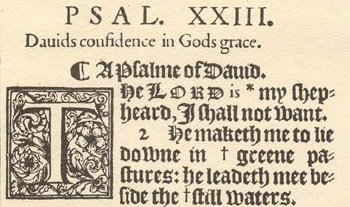
The Lord is my Shepherd, I shall not want.  Though I walk through the valley of the shadow of death I will fear no evil because HE IS WITH ME. (Ps. 23)

In God, whose word I praise, In God I have put my trust; I shall not be afraid. What can mere man do to me? (Ps. 56:4) 

Second:  Always be prepared to give an answer to everyone who asks you to give the reason for the hope that you have. But do this with gentleness and respect.

May I harp for a moment? You know why Christians don’t share their faith more?  Because the way they   have been taught by churches to do it is rude and obnoxious and people don’t want to be rude and obnoxious.  Peter tells us to “stay prepared” to give an answer for why we live like we do.  I don’t think most Christians stay prepared.  But I hope the ones that do caught that last bit of the verse: But do this with gentleness and respect.

Third:  Keep a good conscience so that in the thing in which you are slandered, those who revile your good behavior in Christ will be put to shame.

To keep a good conscience means that the way I live must match the Jesus I serve. Nothing harms our message of Jesus’ good news more than a life grossly inconsistent with that message.  There are always critics who will look for cracks in our obedience and call us hypocrites.  But most people aren’t expecting you to be perfect, just consistent.  When we sin against someone we take responsibility, repent of our sin, ask for their forgiveness.  When we utter word of hurt or disrespect, we confess our fault to the one we have hurt and to others who have witnessed the hurt.  It’s ALL about humility.

Fourth: Be willing, if it is God’s will, to suffer for doing good than for doing evil.

If you are reviled and rejected, and insulted, even fired, or punched, or persecuted, you must maintain your good conscience.  Do not pay back evil for evil, Jesus said.           It is better to suffer for doing good.  Better than what?  Better than denying your values by ignoring the will of God by doing evil, by retaliating, by fighting fire with fire when what is needed are the cooling waters of grace.

If I were to sum up the lesson from all four of these admonitions the summary would sound like this:  I can find peace in fearful times by practicing humble obedience.  In this you will be blessed, but most important of all, the glory will go to God.  To him alone be the praise and glory.